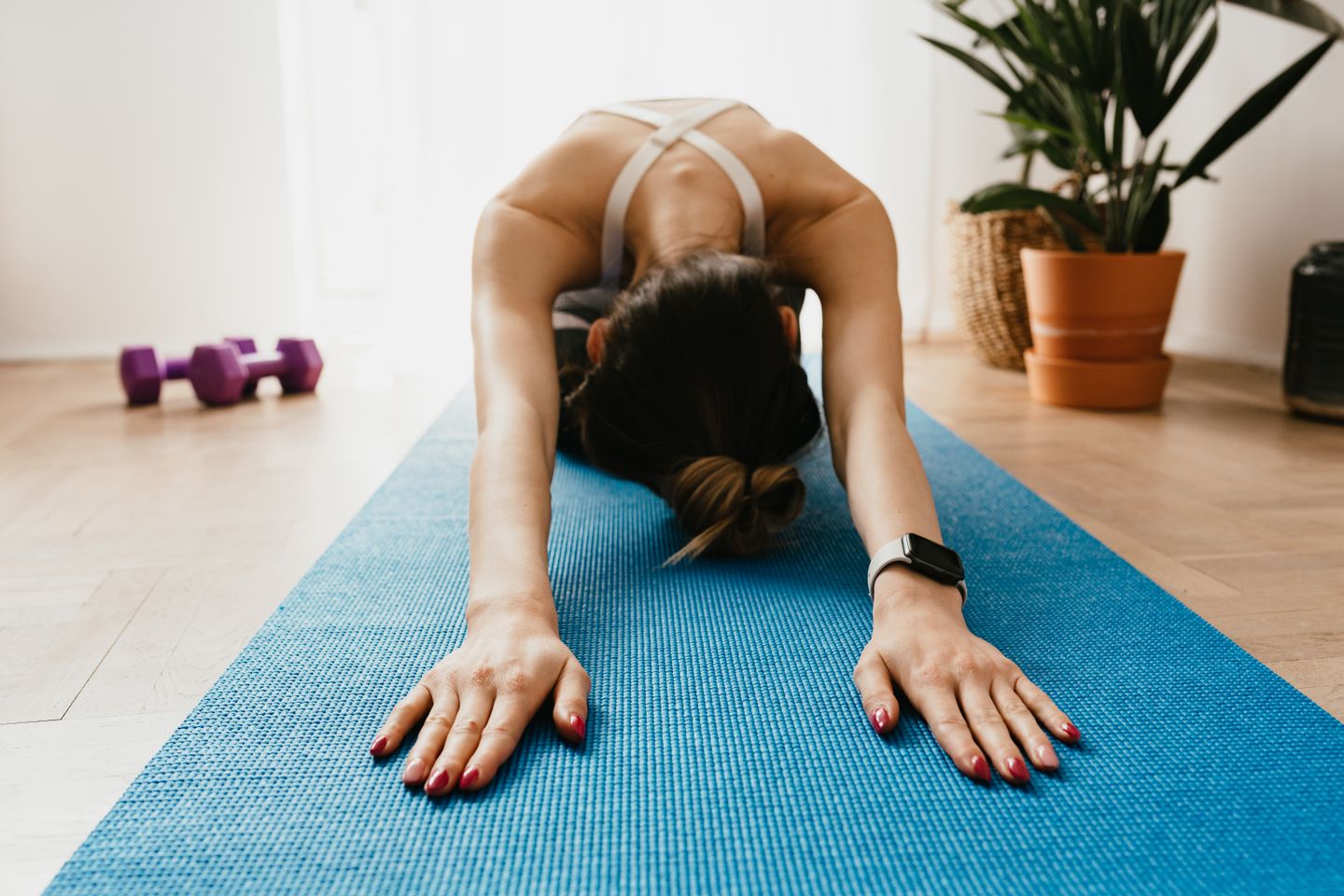
Plan a small sequence
Pick two positions you already find manageable, such as a comfortable reclining arrangement and a supported seat. Think through the route between them before starting. You do not need a long flowing sequence to explore how positions connect.
Keep the floor area clear and arrange any support where it will be useful. Avoid leaving cushions in the path of your feet or hands. A simpler layout makes it easier to pause without discovering that something needs moving mid-transition.
Use familiar stages
Move through a route you know rather than copying an unfamiliar quick demonstration. You might pause on your side before coming to a seat, if that is a comfortable method for you. Take each stage as its own small action.
Use your hands or a stable support in the way you ordinarily find helpful. There is no need to make a transition hands-free. If the route feels difficult or uncomfortable, stay with one suitable position or choose a chair-based session.
Pause when the level changes
Once you reach the next position, settle before adding another movement. Adjust the legs, place a support, or find a comfortable gaze. A brief pause gives you room to decide whether the new arrangement is actually the one you want.
Let your breathing find its usual rhythm without holding it or making the transition depend on a counted breath. If you feel rushed by a guide or recording, pause it. Your own movement can have a slower timetable.
Make fewer transitions useful
Consider grouping movements by position rather than repeatedly changing levels. You can explore two small actions while seated and then take one deliberate route into reclining. Fewer changes may make the session easier to organize without removing variety.
At the end, use the same attention for returning to everyday activity. Allow time for your familiar exit from the floor and a pause before walking. A practice feels clearer when its connecting moments receive as much care as its individual shapes.
A few common questions
Should transitions be seamless?
They can include visible pauses and adjustments. A transition does not need to resemble a continuous flow to be useful, comfortable, or part of a complete session.
What if a recording changes positions too quickly?
Pause the recording or use a written sequence at your own pace. Keep only the transitions you can manage comfortably, and replace an unsuitable section with a familiar position.
Published by the Malalana journal.