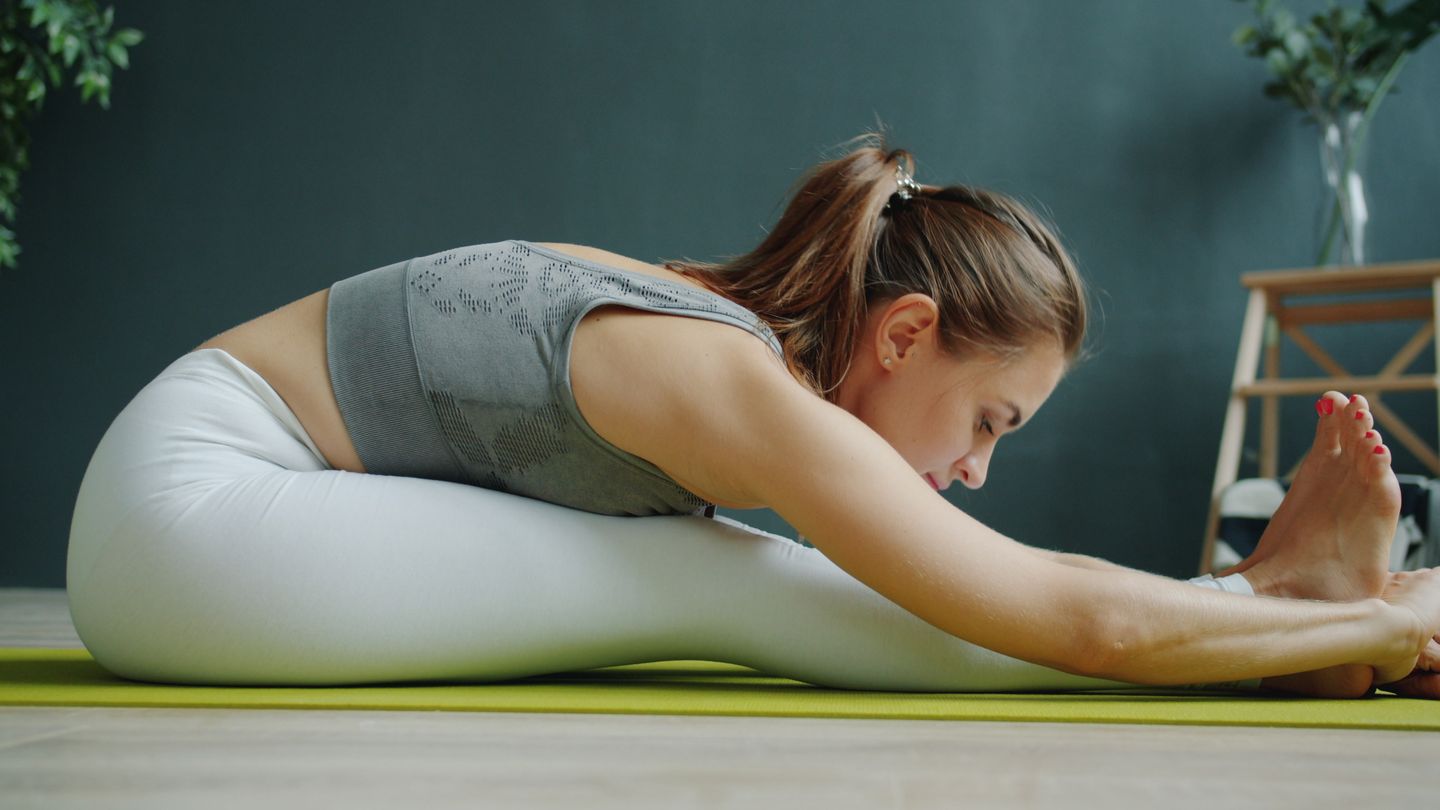
Let the legs choose a place
Sit on the mat in a way that you already find comfortable. You might bend your knees with feet down, cross your legs loosely, or extend them slightly. Choose the arrangement for your own circumstances rather than for its familiar yoga appearance.
Avoid pressing your knees toward the floor or pulling the feet into position. A seated practice does not require a particular leg shape. Keep enough space around you to change the arrangement without bumping furniture or reaching over your props.
Adjust the height thoughtfully
A firm folded blanket can raise the sitting surface a little if that feels useful. Place it evenly so it remains stable. Test the arrangement with a small shift before starting the session, and remove it if it creates more effort.
Let your hands rest on your thighs, beside you, or in another easy place. You do not need to hold the torso in a rigid line. Choose an ordinary upright position that allows a comfortable gaze and natural breathing.
Add an uncomplicated reach
Reach one hand slightly forward at a height you prefer, then return it. Try the other side after a pause. Keep the motion modest enough that the sitting arrangement remains manageable and you can stop at any point.
You can also reach gently out to the side without leaning far. Explore one direction at a time rather than combining it with a large turn. The motion may be low and small; its usefulness does not depend on an impressive shape.
Change before the seat becomes a demand
Reposition the legs whenever you want. Uncross them, move one foot, or take a break in a stable chair. Remaining still for a set time is not the purpose here, and a comfortable change is part of the practice.
Finish by choosing the arrangement that made the session easiest to follow. That can be your starting point next time, while other options remain available. A seated floor practice works best when the seat supports the movement rather than becoming the challenge itself.
A few common questions
Do I have to sit cross-legged?
No. Feet-down, loosely extended legs, or a stable chair may work better. Choose an arrangement you can enter, use, and leave comfortably.
Should I hold my seated posture perfectly straight?
This guide does not require rigid positioning. Find a manageable upright seat, adjust it freely, and keep the movement and breathing easy rather than maintaining a fixed appearance.
Published by the Malalana journal.